
 EN
EN
 EN
EN
Flexible spout pouches are becoming a practical choice for products such as sauces, drinks, baby food, detergents, and personal care liquids. They use less material than many rigid containers while still offering good protection during storage and transport. But lower material use does not automatically mean a lower environmental impact. The way a pouch is designed, printed, produced, and shipped also matters. PROA approaches flexible spout pouch manufacturing with a focus on reducing waste, energy use, and unnecessary material consumption. For brands looking to improve packaging sustainability without giving up convenience, understanding these production choices can help them make better packaging decisions.
How Renewable Materials Can Reduce the Carbon Footprint of Flexible Spout Pouches
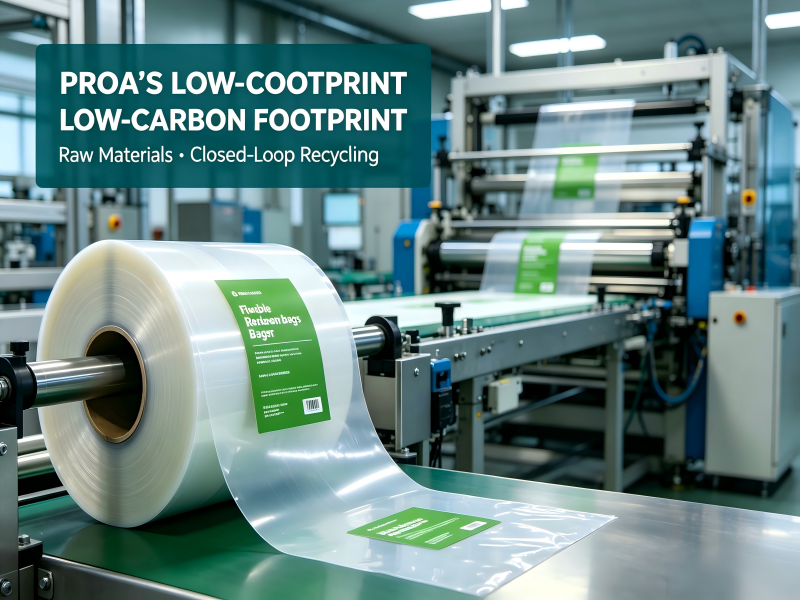
The materials used to make packaging have a major effect on its carbon footprint. When manufacturers include renewable or lower-impact raw materials where the pouch design allows, they can reduce some of the emissions linked to traditional fossil-based materials. For flexible spout pouch , the goal is not simply to replace one material with another. The material still needs to protect the product, handle filling, resist leaks, and remain stable during storage and transport.
A practical example is a food company reviewing its packaging after noticing that its environmental targets were becoming harder to meet. Instead of changing the whole package at once, the company could work with its packaging supplier to review the film structure, material sources, and amount of material used per pouch. This step-by-step approach makes it easier to balance sustainability with product safety and shelf life.
When renewable raw materials are selected, buyers should also look beyond the label. Ask where the material comes from, how consistently it can be supplied, whether it works with the existing production process, and what certifications or supporting data are available. A material that sounds greener may not be a good choice if it causes higher production waste or fails to protect the product.
For PROA's flexible spout pouches, material selection can be considered together with pouch thickness, barrier needs, sealing performance, and transportation requirements. Using the right material in the right amount helps avoid unnecessary resource use while keeping the package functional. This gives manufacturers a more practical way to lower the carbon impact of packaging without treating sustainability as a separate task from everyday production.
How Energy-Efficient Production Reduces Emissions in Flexible Spout Pouch Manufacturing
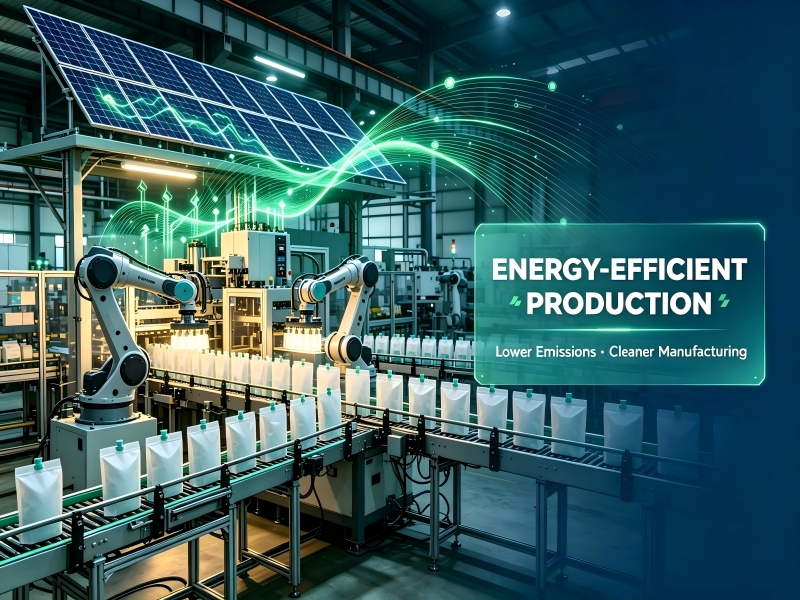
Energy-efficient production processes lower emissions by reducing the amount of electricity and fuel needed to make each food pouch packaging . In flexible packaging, energy is used across several stages, including film production, printing, lamination, pouch forming, sealing, and other factory operations. Small improvements across these steps can add up when thousands or millions of pouches are produced.
A simple example is a production line that runs for many hours each day. If equipment consumes more power than necessary, that extra energy is repeated with every production batch. Improving machine settings, reducing idle running time, maintaining equipment properly, and using efficient systems can help cut unnecessary energy use without changing the basic pouch design.
For a manufacturer such as PROA, energy efficiency can also be connected to production planning. Running suitable batch sizes, reducing setup waste, and keeping machines operating within stable conditions can help avoid repeated heating, cooling, and adjustments. Less rejected material also means less energy is spent making packaging that never reaches the customer.
When evaluating a flexible spout pouch supplier, buyers can ask practical questions about energy management, production efficiency, equipment maintenance, and waste control. These details give a clearer picture than simply looking at a sustainability claim. A lower-carbon package comes from many small production decisions working together, from the moment raw materials enter the factory until finished pouches are packed for shipment.
Designing Flexible Spout Pouches for Better Recyclability and Circularity
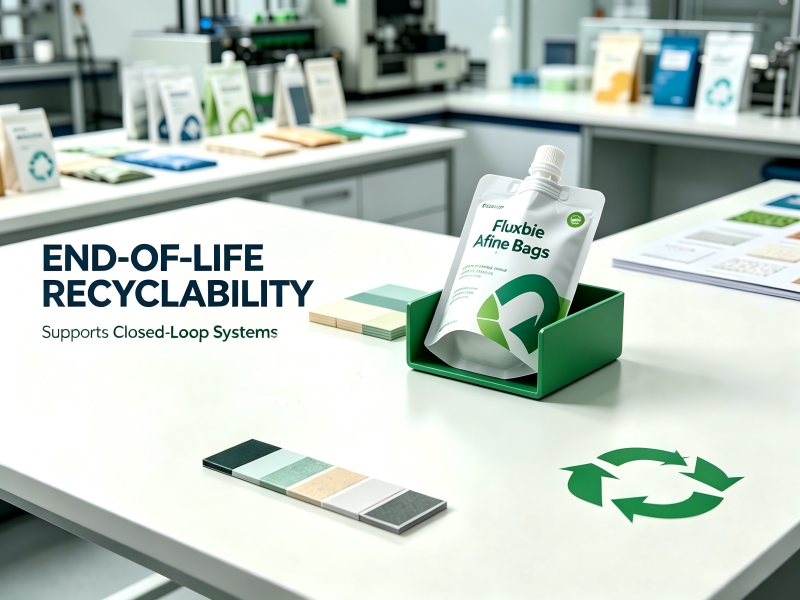
A package's environmental impact does not stop when the product is used. What happens to the pouch afterward also matters. If a flexible spout pouch packaging can be collected, sorted, and processed through an appropriate recycling system, some of its materials may have a chance to return to manufacturing instead of going straight to disposal. This is an important part of building a more circular packaging system.
For example, a food brand may switch to a pouch with a recyclable structure and then discover that local recycling facilities do not accept that format. The package may look recyclable, but the real outcome depends on collection systems, sorting equipment, material structure, and available recycling technology. This is why recyclability needs to be considered from the design stage rather than added as an afterthought.
In designing a flexible spout pouch, manufacturers should evaluate factors such as the quantity and kinds of materials, pouch construction, inks, adhesives, and the spout. Designing with compatibility in mind for the target recycling stream can simplify sorting and processing. However, the pouch must also continue to fulfill essential performance needs, including durability, effective sealing, and protection of the contents.
For brands working with PROA, a useful approach is to define the target end-of-life pathway before finalizing the pouch. Check which recycling systems are available in the markets where the product will be sold, then select a structure that fits those systems where technically possible. Clear disposal information can also help consumers make the right choice.
A recyclable pouch alone does not create a closed-loop system. Collection, sorting, recycling capacity, and responsible package design all need to work together. Looking at the complete journey helps manufacturers make sustainability decisions that are practical rather than based only on packaging labels.

President of yaen Import and Export Materials Manufacturer | 25 Years' Industrial fabrics manufacturer, professional production team, strict online and offline inspection method, makes DER products well distributed to more than 100 countries all over the world.