
 EN
EN
EN
EN
July 6 - Disruptions in the Strait of Hormuz have tightened global petrochemical feedstock supply and driven plastic prices to record highs, jumping nearly 40% since February. Several prominent Asian petrochemical producers have already invoked force majeure and halted plastic production. Since 40% of all plastic is used for single-use packaging, these market shocks cause dramatic price hikes for thousands of consumer goods.
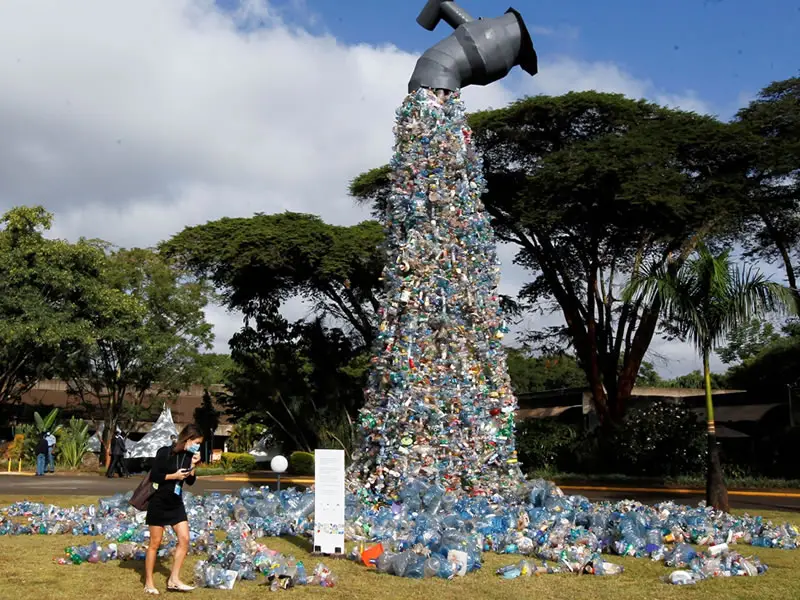
The crisis is a shocking reminder of why we need to build a real circular economy – one that moves away from the take-make-waste of finite materials and values their constant reuse instead; one that enables value-creation throughout a longer material lifespan, with less reliance on volatile imports. It can go beyond plastics to serve new systems for other forms of packaging, as well as minerals, metals and textiles.
We see that governments with strong renewable energy capacity are better at managing their energy prices as the supply of oil and gas fluctuate. Pakistan's "solar boom" helped it avoid roughly $12 billion in oil and gas imports. Meanwhile, its neighbour Bangladesh, with only 2% renewables, had to shut down universities and implement fuel rationing. Reuse is akin to renewable energy: It increases resilience.
Yet three months before the EU's landmark Packaging and Packaging Waste Regulation (PPWR) was meant to go into effect this August, 138 corporations sent an entreaty to the European Commission to postpone and weaken enforcement of the new law.
"Transitioning to reuse requires billions in investment, significant infrastructure changes and … does not necessarily provide an environmental benefit,” the letter states, adding that businesses “lack legal clarity and clear guidance on how exemptions will apply, undermining investment in waste-collection systems".
These companies are ignoring that reuse moves packaging from the debit side to the credit side of a company's balance sheet. Reuse also avoids tariffs, precarious shipping and freight, and price volatility. With the cost of plastic rising inexorably, companies would do well to pivot their current strategies away from single-use plastic.
Just as renewables require a supportive grid infrastructure to grow in capacity, reuse systems need infrastructure, and that requires reimaging entire supply chains through standards, policy, and business innovation.
Over the past six years, we at PR3, the Global Alliance to Advance Reuse, have assembled a panel of more than 100 leaders from multinationals to environmental justice advocates around the world to craft six standards that undergird the reuse industry: ensuring efficiency, sanitization confidence, interoperability, and digital traceability across the whole system.
These standards are being adopted by dozens of businesses and cities around the world. A new global reuse symbol, markedly different from the recycling symbol, is already visible in 10 countries as well. In other words, reuse is investment-ready.
Policy is following. Indonesia’s Food and Drug Authority has passed regulations for reuse in cosmetics packaging and Plasticdiet Indonesia, supported by the Asia Development Bank, is now drafting new regulations that support and enable reuse.
The U.S. Department of Energy, under both the Biden and Trump administrations, awarded funding to reuse efforts through the Re-X Before Recycling Prize, including a technical economic analysis of reuse systems.
Multinational brands, however, have been slow to innovate and adopt circularity. Most of the consumer goods companies' new investments are focused on recyclability, a downstream technology that assumes waste will be generated.
Between 2023 and 2025, the Ellen MacArthur Foundation’s business signatories, representing 20% of all plastic packaging, increased the amount of recycled content in packaging, while the share of reusable packaging remained static.
Reuse can eliminate up to 90% of packaging manufacturing, while recycling doesn’t eliminate the manufacturing of a single package. If the answer to expensive plastic is simply switching to coal-based or bio-based plastic, we are only shifting our dependence to other volatile commodities.
In the 1980s, the United Nations was negotiating the Montreal Protocol, the global treaty to phase out CFCs, the chemical causing a hole in the ozone layer. Dupont, the largest CFC producer, warned that costs would be astronomical, that entire industries would fold, and that the ozone hole was a "science fiction tale”. Thank goodness governments ignored them. The protocol passed in 1987 and is considered one of the most successful environmental agreements in history. The ozone hole is healing.
From automobiles to AI, there are moments when everything changes. This is one of those moments. When reuse becomes a default setting for the world economy, we move closer to a liveable future.
The company boasts a 40,000 m² production base, a 10,000 m² dedicated clean workshop, and a team of over 300 employees. Our equipment includes 3 high-speed printing presses, 3 high-speed dry laminators, 1 solventless laminator, 10 high-speed bag-making machines, and automated tube-making equipment, with a daily output capacity of over 2 million stand-up pouches — demonstrating strong production and delivery capabilities.
06 Aug,2026
09 Jul,2026
29 May,2026
29 May,2026
 EN
EN